capa1

About the Journal


The scientific journal RECIMA21 has the mission of promoting and disseminating scientific knowledge in the fields of teaching and research, with a focus on Exact and Earth Sciences, Social Sciences, Health Sciences, Human Sciences, and Engineering/Technology. We fully adopt an open access policy, ensuring that any user can access, read, and download full articles free of charge, without the need for registration or payment.

Consolidated as a platform for multidisciplinary dialogue, RECIMA21 addresses social, environmental, technological, and sustainability-related issues, reflecting the interconnection among different fields of knowledge. We understand that teaching and research, within a multidisciplinary context, evolve in an integrated manner, articulating theoretical advances and practical applications.

Our commitment also extends to the dissemination of research at national and international levels, contributing effectively to the strengthening, circulation, and democratization of scientific knowledge in the areas we cover.

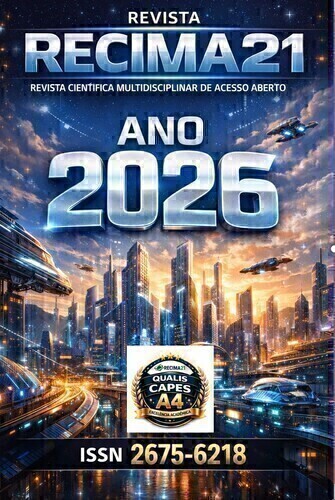
RECIMA21 is a monthly electronic publication, operating on a continuous flow since August 2020, registered under ISSN 2675-6218. It operates independently and is managed by its Editors-in-Chief, Editorial Board, and Scientific Board. In the most recent evaluation cycle, the journal achieved Qualis CAPES A4 in the 2021–2024 quadrennium, a recognition that encompasses more than 50 distinct research areas, reaffirming its relevance and excellence within the Brazilian scientific landscape. We publish articles in Portuguese, English, and Spanish.


Announcements

5TH INTERNATIONAL MEETING OF SCIENTIFIC JOURNALS - FCU – EUA

15/12/2025

On October 31, 2026, Florida Christian University (FCU), located in the state of Florida, United States, hosted the 5th International Meeting of Scientific Journals, an academic and editorial event of high relevance that brought together professors, researchers, editors, academic managers, and scientists from Brazil and several other countries. Held in a hybrid format, with in-person activities at FCU facilities and live online streaming, the meeting established itself as an important international forum dedicated to strengthening science, high-quality academic production, and cooperation among scientific journals.

The event aimed to promote integration among national and international scientific journals, encourage the exchange of editorial experiences, discuss quality standards, indexation, and scientific impact, and contribute to the professionalization of editorial management within the context of open science. Throughout the program, strategic and contemporary issues related to scientific publishing, research ethics, legal, technological, and institutional challenges faced by academic journals, as well as the transformations driven by innovation and artificial intelligence in science, were thoroughly discussed.

The program featured research presentations and lectures delivered by specialists with extensive academic and editorial experience. Key topics included the management of editors and co-editors based on more than two decades of professional practice, legal considerations in scientific publishing, the relevance of data protection regulations for academic journals, and reflections on higher education, research, and scientific publishing in different international contexts, including China. Additional discussions addressed active methodologies in medical education, automotive recycling behavior, strategies for publishing in high-impact international scientific journals, processes for indexation in highly regarded academic platforms, and the creation and management of scientific journals using the Open Journal Systems (OJS) platform.

Other highlights included discussions on the distinctions between scientific articles, undergraduate theses, reviews, preprints, and experience reports; the application of ISO standards in education as a means of fostering scientific research; the impacts of artificial intelligence on knowledge production—examined from the perspective of both potential risks and opportunities—and an analysis of investments in science and technology within the global political landscape, considering their social implications worldwide.

With broad public participation, the issuance of participation certificates, and strong academic engagement, the 5th International Meeting of Scientific Journals reaffirmed its role as a qualified space for reflection, professional development, and the strengthening of international scientific networks, making a significant contribution to the advancement of research, scientific publishing, and knowledge dissemination. All information, records, and related content are available on the official Florida Christian University platform:

https://platform.floridachristianuniversity.edu/hub/cursos?id=23

Read more about 5TH INTERNATIONAL MEETING OF SCIENTIFIC JOURNALS - FCU – EUA

Current Issue

Vol. 7 No. 2 (2026): CLICK HERE TO ACCESS THE ARTICLES
					View Vol. 7 No. 2 (2026): CLICK HERE TO ACCESS THE ARTICLES

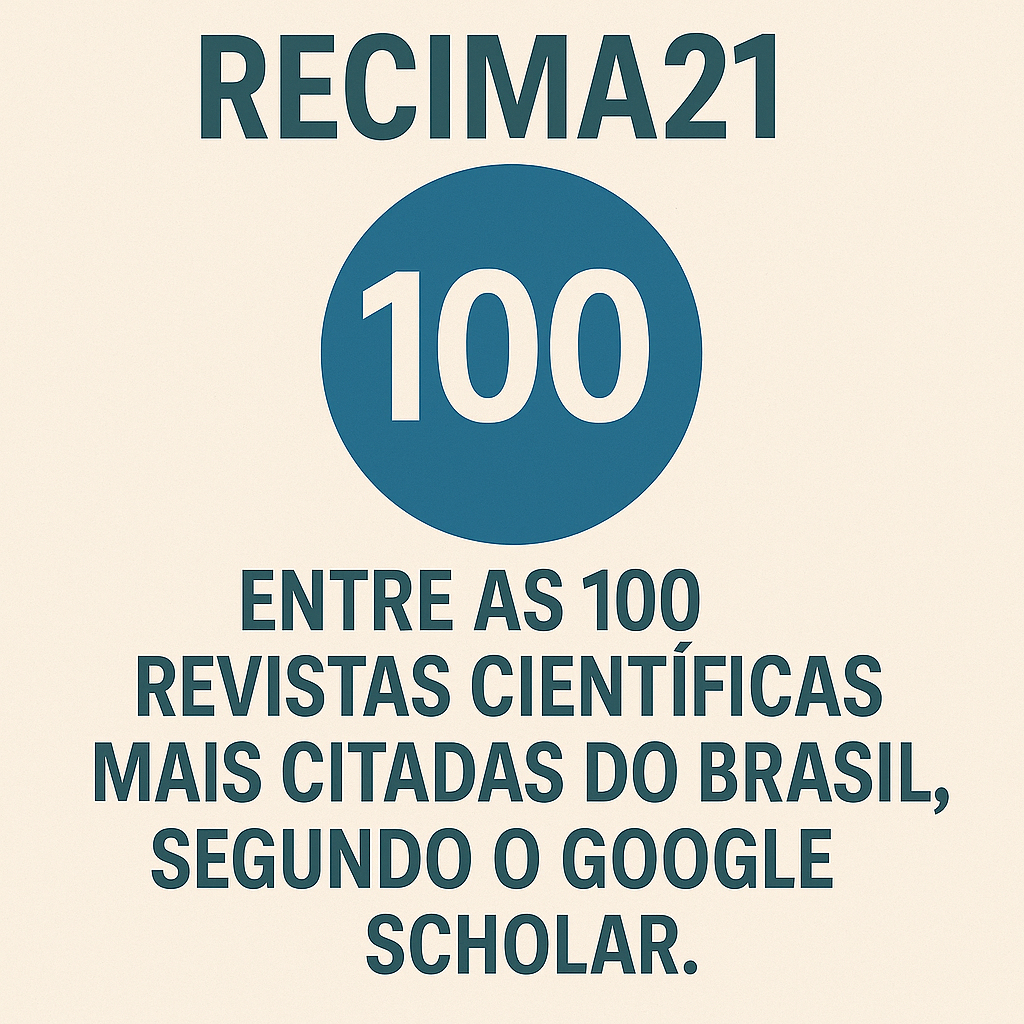
Dear authors, professors, researchers, and reviewers, the entire research community, it is with great pleasure and honor that we announce that RECIMA21 has received a new classification in the CAPES Qualis system. We are now ranked A4, joining the group of excellence journals in Brazil. We have already published more than 4,000 articles, all with DOI, and we are among the most accessed journals according to Google Scholar. We are indexed in more than 60 national and international databases and directories, operate under open access, and continue to grow steadily. We thank everyone who made this achievement possible.

Welcome to volume 7, issue 2, of 2026. A year that promises even more innovations, progress, and achievements for RECIMA21.

Published: 01/02/2026

ARTIGOS

  • THE MAIN VISUOMOTOR ALTERATIONS IN CHILDREN WITH AUTISM SPECTRUM DISORDER

    Cleiciara Guirra-Gonçalo
    e727199
    DOI: https://doi.org/10.47820/recima21.v7i2.7199
  • HOW DOES THE EDUCATIONAL PROCESS OF INTEGRATION AND INCLUSION OF STUDENTS WITH DISABILITIES OCCUR IN THE HIGH SCHOOL ENVIRONMENT?

    Douglas Alves de Melo, Mônica da Silva Bonfim, Sidinei Batista de Santana, Wesleyanny Costa Velez
    e727196
    DOI: https://doi.org/10.47820/recima21.v7i2.7196
  • CONNECTION BETWEEN STRUCTURAL ELEMENTS BY THE FINITE ELEMENT METHOD: A SYSTEMATIC REVIEW

    Isaque Soares Figueiredo, Isaias Soares Figueirêdo, Marco André Argenta
    e727193
    DOI: https://doi.org/10.47820/recima21.v7i2.7193
  • CONTEMPORARY EXHAUSTION AND DISORIENTED ANTHROPOTECHNICSTHINKING BURNOUT THROUGH YOU MUST CHANGE YOUR LIFE BY PETER SLOTERDIJK

    Francisco Mata Marcano
    e727189
    DOI: https://doi.org/10.47820/recima21.v7i2.7189
  • QUILOMBOLA SOCIOCULTURAL KNOWLEDGE AND AN EQUITABLE CURRICULUM IN ABAETETUBA-PA: BETWEEN THE PNEERQ AND TERRITORIAL (RE)EXISTENCE

    Valdomiro Vale de Carvalho Junior, Janaina Pinheiro Gonçalves
    e727201
    DOI: https://doi.org/10.47820/recima21.v7i2.7201
  • A DIDACTIC SEQUENCE FOR HIGH SCHOOL STUDENTS WITH AUTISM SPECTRUM DISORDER IN PHYSICS EDUCATION

    Ana Luiza Grodzicki, Admilson Luiz Navarro, Marcel Castro Cantanhede Araújo, Lucas Alexandre Mortale
    e727137
    DOI: https://doi.org/10.47820/recima21.v7i2.7137
View All Issues

MULTIDISCIPLINARY SCIENTIFIC JOURNAL - RECIMA21 - Exact and Earth Sciences, Social, Health, Humanities and Engineering/Technology. 2675-6218 ISSN